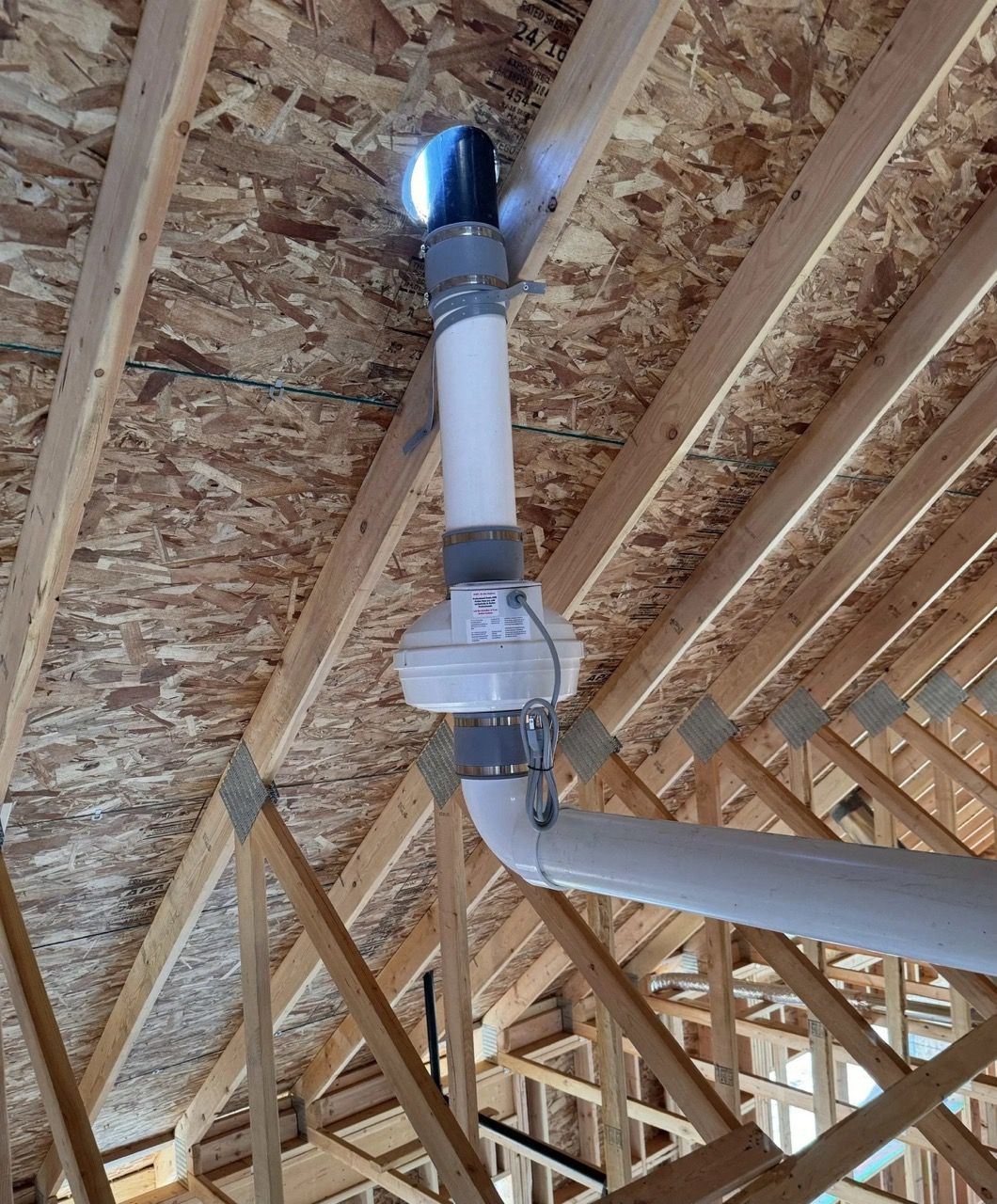
Radon Fan Making Noise or Not Working? What to Check
A working radon fan runs 24 hours a day with a steady, low hum, much like a refrigerator. If it has gone silent, started rattling or grinding, or the liquid in the manometer on the pipe is level, your system may not be pulling radon out of your home. Listen, look at the manometer, then test.
Utah Radon Defense · Updated October 2026
How to Tell If Your Radon Fan Is Working
You do not need tools. Most homeowners can do all three checks themselves.
Listen to the fan
A radon fan sounds much like the steady hum of a refrigerator. The fan model, airflow, mounting and your distance from it all affect what you hear.
Silence, or a new rattle, grind or vibration, is the sign to look closer.
Look at the manometer
Every system should have a manometer on the pipe: a small U-shaped gauge with liquid inside. When the fan is pulling air, the liquid sits higher on one side than the other.
If both sides are level, at 0, the fan may not be pulling air.
Test your home
A quiet fan and an uneven manometer are good signs, but only a test tells you your radon level. A working system should prove it with a number.
Winter, with the house closed up, is a good time to retest.
What Your Radon Manometer Should Show
The manometer measures the suction your fan creates under the foundation. You do not need to read the exact numbers. What matters is whether the two sides of the liquid are uneven or level.
Uneven: the fan is pulling air through the system. Level, with both sides at 0: the fan may have stopped, lost power, or the system may have a leak or a blocked pipe. Call us.
If your manometer looks normal but the fan sounds different than it used to, it is still worth a system check before a small problem turns into a stopped fan.
Radon Fan Noise and What It Usually Means
Use this as a guide, not a diagnosis. If something on this list sounds like your system, schedule a check and we will tell you what is going on.
A steady, low hum
No sound at all
Humming that keeps getting louder
Rattling or vibration
A soft rush of air in the pipe
Fan sounds normal, but the manometer is level
Do not turn your radon fan off, even if it is noisy
A radon fan is designed to run 24 hours a day. Turning it off lets radon build back up under your foundation and into your home. If the noise bothers you, have the system checked instead. Most homeowners tell us they are surprised by how quiet our systems are.
Repair, Replace or Keep It Checked
Like anything mechanical, a radon fan eventually wears out. If yours has stopped or is failing, we replace radon fans and repair mitigation systems across Utah, including systems installed by other companies, and retest so you know your number is back where it should be. For how long fans usually last, see our radon mitigation FAQs.
If you would rather not wonder whether your system is working, Shield Membership is our radon monitoring and system inspection membership. With a new installation, it includes the monitor and the first two years of membership, then renews every 2 years at $299.
Radon Fan Questions
Should a radon fan make noise?
A little. A working radon fan sounds much like the steady hum of a refrigerator. The fan model, airflow, mounting and your distance from it affect what you hear. Silence, or a new rattle, grind or vibration, means the system should be checked.
What does it mean if my radon manometer reads 0 on both sides?
If the liquid on both sides of the manometer is level, at 0, the fan may not be pulling air. It may have stopped or lost power, or the system may have a leak or a blocked pipe. Call for a system check.
Can I turn off my radon fan at night if it is loud?
No. A radon fan is designed to run 24 hours a day. Turning it off lets radon build back up under your foundation and into your home. If the noise bothers you, have the fan and its mounting checked.
My radon fan stopped. Is my home safe?
Not necessarily. Without the fan pulling air, radon can build back up inside your home. Call to have the fan repaired or replaced, then retest so you know your number.
How do I know my radon system is still working?
Test again. A working system should prove it with a number. Check the manometer on the pipe: if both sides read 0, the fan may not be pulling air, and you should call us. Beyond that, only a test tells you your level.
Is Your Radon System Still Working?
We check the fan, the manometer and the pipe from the basement to the roof, fix what we find, and retest so the repair is measured, not assumed.
Recent Posts